Can squirrels get in attic from chimney?
A squirrel can enter an attic through an opening near a chimney, but finding one at the chimney does not prove there is an open passage from the flue into the attic. The first step is to establish where the animal is: on the outside, inside the chimney, in the surrounding enclosure, or in the attic itself.
For Charleston and Myrtle Beach homeowners, that distinction determines what needs attention. A roofline opening calls for wildlife exclusion and building repairs. An animal or nest inside the chimney also calls for a chimney professional before the fireplace is used again.
How the chimney and attic can be involved
The word “chimney” can describe several different parts of a house. The flue is the passage that carries combustion exhaust outside. A chimney chase is an enclosure around a chimney or vent system. Openings around that enclosure are different from openings inside the exhaust passage, as the Department of Energy’s Building America guidance illustrates.
There are three possibilities to investigate:
- Exterior access to the roofline. A squirrel seen climbing near the chimney may be reaching a separate roof-edge, soffit, or vent opening. The Wildlife Center of Virginia identifies roofline openings as attic entry points.
- Entry into the chimney itself. An uncapped or damaged opening may allow a squirrel into the chimney, where it can nest or become trapped. That finding alone does not establish attic access.
- A gap in the surrounding structure. An opening beside the chimney or in a damaged chase may lead into a building cavity. Whether that cavity connects to the attic must be checked on site.
Do not assume every chimney is intact or that every nearby gap is harmless. The practical question is which opening the animal actually uses and where that opening leads.
Do not light a fire to drive an animal out
If you suspect an animal is inside the chimney, leave the fireplace unused. Do not burn a test fire or try to smoke the animal out. The Wildlife Center of Virginia specifically warns against smoking squirrels out of chimneys.
Keep children and pets away from the fireplace and ask for prompt professional guidance if an animal appears trapped. Do not reach into the fireplace, climb onto the roof, or put objects down the chimney. Tell the professional whether the fireplace is wood-burning or gas and whether any other appliance uses the affected chimney.
Quiet does not establish that the chimney is ready for use. Illinois Department of Natural Resources guidance advises keeping the fireplace unused until the animals are gone and the chimney has been professionally cleaned. Have the affected system appropriately inspected and any required repairs completed before using it again.
Observe from the ground without guessing the species
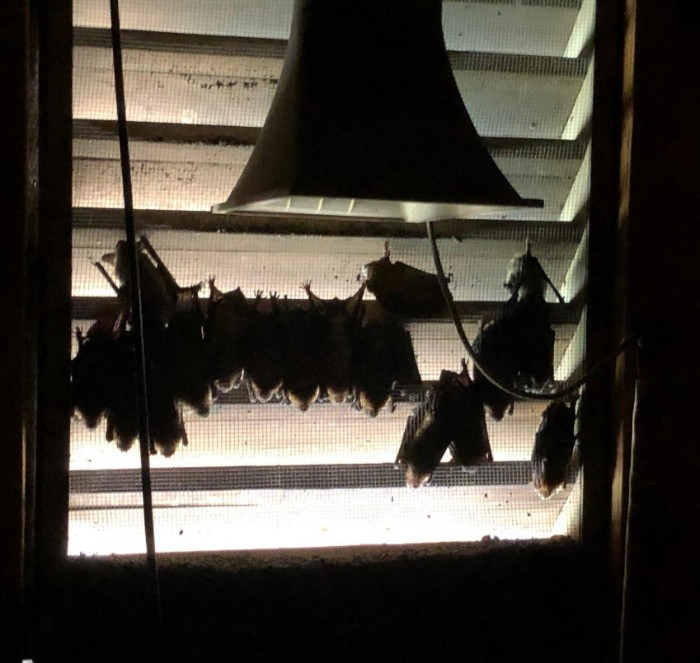
This existing Metro image shows bats, not squirrels. Species identification matters before choosing an exclusion method.
From a safe ground-level position, note where animals enter or disappear. Binoculars can help you observe the roofline without climbing. Record the time, location, and whether movement appears to involve the chimney opening or a separate gap. A short video taken from the ground can help explain what you saw.
Scratching alone does not identify the animal. Bats, birds, and other wildlife also need to be distinguished from squirrels before choosing an exclusion method. Even squirrel activity varies: South Carolina’s tree squirrel guidance notes that flying squirrels differ from other tree squirrels in being active at night. Use observations as clues, not a diagnosis.
Report visible damage or fallen debris without disturbing it. Leave attic entry and close inspection to the professional; the Washington Department of Fish and Wildlife recommends professional help where attic access and movement are hazardous.
Separate wildlife exclusion from chimney safety
Ask for a plan that identifies the species, occupied space, active entrances, and any dependent young. Removing one visible squirrel is not enough to establish that the building is empty. Closing an entrance too soon can separate a mother from young that cannot leave independently.
The wildlife portion should explain how animals will be removed or excluded and how their absence will be verified before permanent closure. The chimney portion should address the affected flue, obstructions, condition, and suitability for use. A qualified chimney professional should determine the necessary inspection, cleaning, and repairs. The Consumer Product Safety Commission warns that chimney blockages can allow carbon monoxide into a home.
Ask who is responsible for each part. Wildlife removal does not, by itself, establish that a fireplace is safe, and a new cap does not repair a separate attic entrance.
Close the correct openings after the animals are out
Do not cap a chimney or permanently seal an entry while animals remain inside. Once their absence is confirmed, arrange an appropriate chimney cap or repair and address the separate building openings identified during inspection. Repairs around hot flues must preserve required clearances and use suitable materials; ordinary gap-filling is not a substitute for chimney work.
For help identifying a suspected squirrel entry, explore Metro’s Charleston squirrel removal services or Myrtle Beach wildlife removal services. When requesting an inspection, explain what you observed and whether the sounds seem to come from the fireplace, the chimney enclosure, or overhead.